

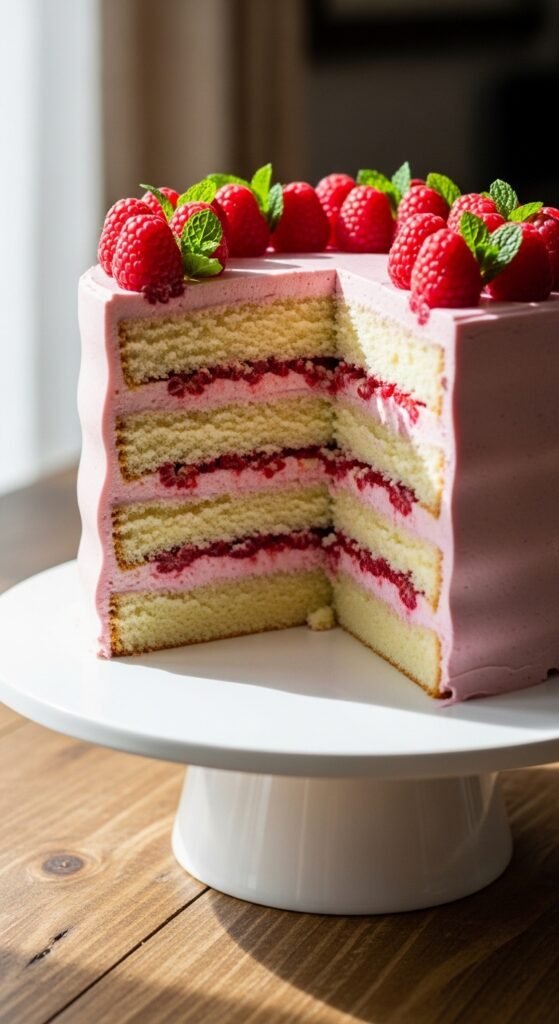
There’s something magical about slicing into a perfectly stacked layer cake — clean lines, even layers, and frosting that looks straight out of a bakery window. But if your cakes tend to lean, slide, or bulge at the sides, you’re not alone. Many home bakers struggle with getting layers to sit neatly on top of each other.
The good news? You don’t need professional training or fancy equipment to create a beautifully balanced cake. With a few smart techniques and a little patience, you can make layer cakes that look just as amazing as they taste.
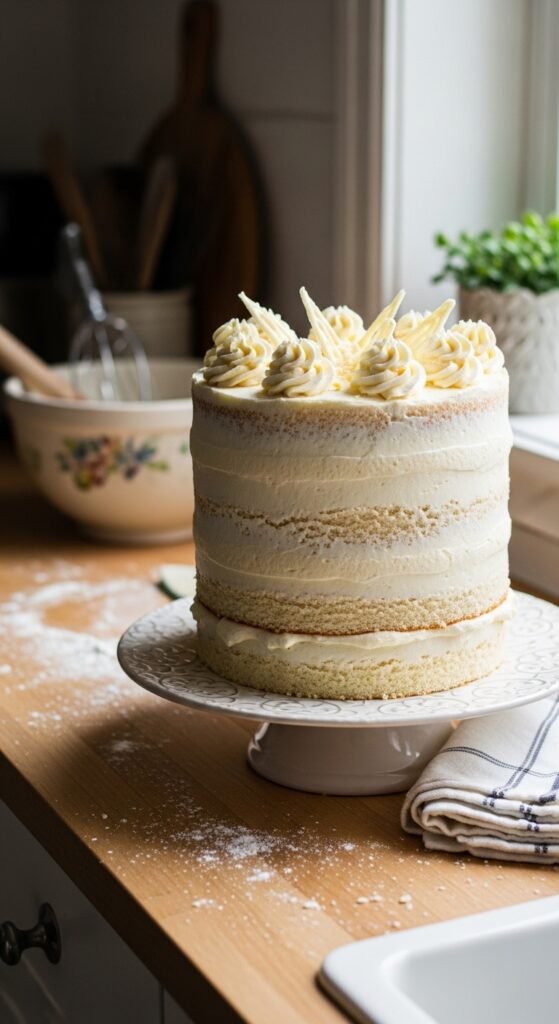
Let’s break it down step by step so your next cake stacks like a dream.
Start With the Right Cake Recipe
An evenly stacked cake begins long before frosting — it starts with the batter itself. Some cakes are naturally sturdier and easier to stack than others.
Choose recipes that are:
- Moist but not overly soft
- Dense enough to hold structure
- Designed for layering (butter cakes and sponge cakes work well)
Avoid: ultra-light or overly fluffy cakes when making tall stacks, as they compress easily.
Helpful tips:
- Measure ingredients accurately using measuring cups or a kitchen scale.
- Don’t overmix batter — it creates uneven texture.
- Divide batter evenly between pans for uniform layers.
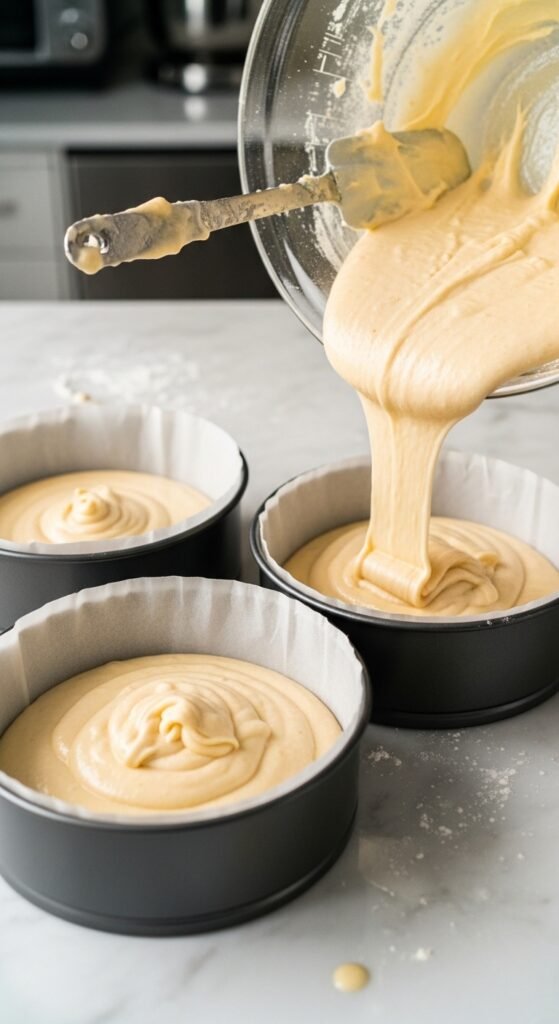
Bake Flat, Even Cake Layers
Domed cakes are one of the biggest reasons stacks become unstable. Flat layers are the foundation of a professional-looking cake.
How to bake evenly:
- Use identical cake pans.
- Preheat your oven fully before baking.
- Place pans in the center rack for balanced heat.
Pro baker trick:
Wrap damp cake strips or a wet towel around the outside of your pans. This slows edge baking and helps cakes rise evenly instead of forming a dome.
If your cakes still dome slightly, don’t worry — you can fix that later.
Level Your Cakes Like a Pro
Leveling is the secret step many beginners skip — and it makes a huge difference.
Once cakes are completely cool:
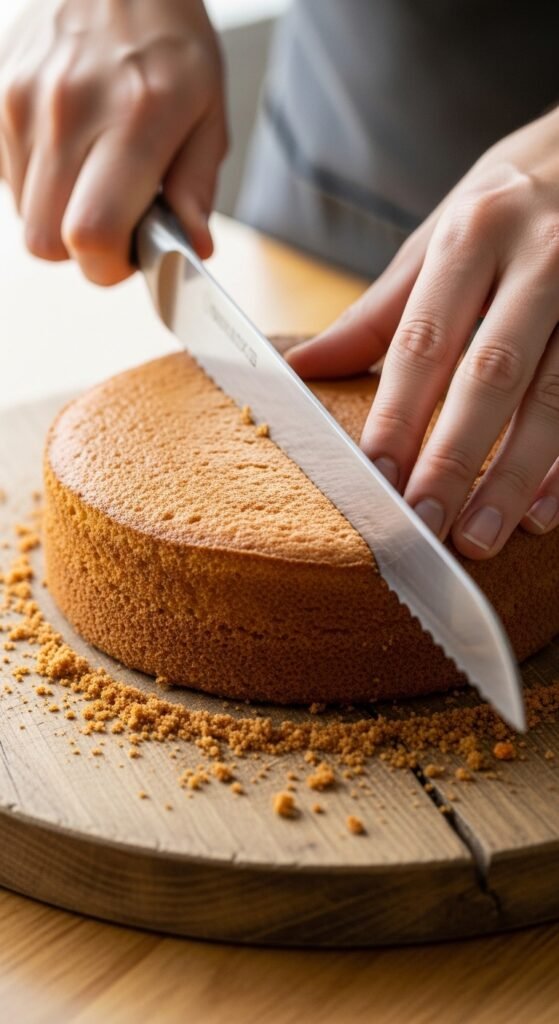
- Use a serrated knife or cake leveler.
- Slice off the domed top slowly.
- Rotate the cake while cutting for accuracy.
You’ll be left with flat surfaces that stack securely without sliding.
Bonus tip: Save the trimmed tops for cake pops or snacks!
Build a Stable Cake Base
Before stacking, create a strong foundation.
You’ll need:
- A sturdy cake board
- A small amount of frosting (acts like glue)
Spread a thin layer of frosting on the board before placing the first cake layer. This prevents movement while assembling.
Stacking method:
- Place first layer flat-side down.
- Add an even layer of frosting.
- Spread frosting edge-to-edge using an offset spatula.
- Gently place the next layer on top.
Press lightly — never squash the cake.
Use the Right Amount of Filling
Too much filling causes layers to slide or bulge outward.
Perfect filling rule:
Aim for about ¼–½ inch of frosting or filling between layers.
To keep everything neat:
- Pipe a frosting “dam” around the edge before adding softer fillings like jam or cream.
- Use consistent frosting thickness for every layer.
This small detail keeps your cake balanced and clean-looking.
Chill Between Steps
Professional bakers rely on chilling — and you should too!
After stacking your layers:
- Refrigerate the cake for 20–30 minutes.
- This firms up frosting and locks layers into place.
Chilling prevents shifting when you apply the final coat of frosting.
Why it works:
- Cold frosting stabilizes structure.
- Layers settle naturally.
- Decorating becomes much easier.
Apply a Crumb Coat First
A crumb coat is a thin layer of frosting that traps loose crumbs before the final finish.
How to do it:
- Spread a very thin frosting layer over the entire cake.
- Don’t worry about perfection.
- Chill again for 15–20 minutes.
Once chilled, your final frosting layer will glide on smoothly.
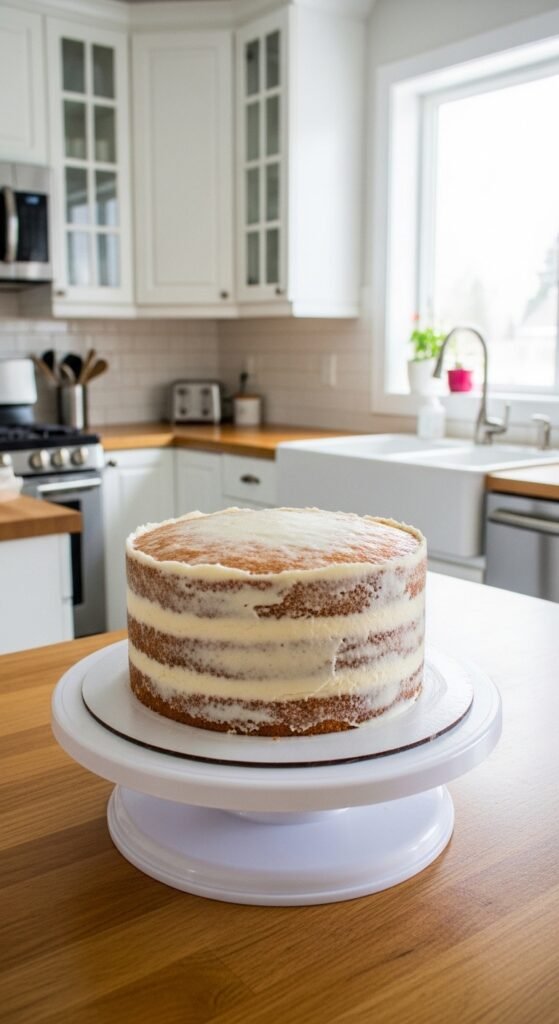
Finish With Smooth, Even Frosting
Now comes the fun part — making your cake look bakery-perfect.
For smooth sides:
- Use a cake scraper or spatula.
- Rotate the cake stand while holding the scraper steady.
- Work slowly instead of adding too much frosting at once.
If the cake starts leaning, pause and chill again. Patience creates clean results.
Common Mistakes to Avoid
Even experienced bakers run into stacking problems. Here’s what to watch out for:
- Frosting warm cakes (causes sliding)
- Uneven layer sizes
- Too much filling
- Skipping chilling steps
- Soft frosting that can’t hold structure
Small adjustments can completely transform your results.
Final Thoughts: Your Bakery-Style Cake Awaits
Making layer cakes that stack evenly isn’t about perfection — it’s about technique. When you bake flat layers, level carefully, control your filling, and chill between steps, everything comes together beautifully.
Soon, cutting into a tall, straight cake will feel completely natural — and incredibly satisfying.
Save this guide for later and try it the next time you bake — your future cakes will thank you!

Leave a Reply